Young people’s computer programs get data from space
> INITIATING DECRYPTION SEQUENCE...
An amazing 25,707 participants had their code run on the International Space Station (ISS) this year, marking the European Astro Pi Challenge’s 10th anniversary in style.
Yesterday, Astro Pi teams and their mentors received their official certificates and data — the final stage of this year’s challenge. On each certificate, participants can see the exact time and the location of the ISS when their program was run.
Congratulations to every student, teacher, volunteer, and parent involved. Your support made this historic year possible. We are also thrilled to share a special message from our 2025/26 Astro Pi Ambassador, ESA Astronaut Sophie Adenot.
The European Astro Pi Challenge is an ESA Education project run in collaboration with the Raspberry Pi Foundation, implemented by ESEROs at a national level. It offers young people the amazing opportunity to conduct scientific investigations in space by writing computer programs that run on Raspberry Pi computers on board the International Space Station.
Mission Zero: Art in orbit
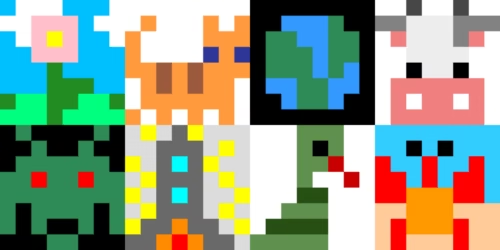
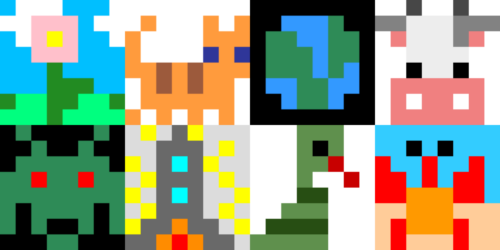
Mission Zero invites young people to create nature-inspired pixel art to display for the astronauts aboard the ISS. This year, we ran a total of 17,170 programs created by 24,408 participants.
By using the Astro Pi’s colour sensor to set their background colours, these programs combined live data from the station with each team’s unique artwork. The results brought a vibrant reminder of nature and Earth to the crew. You can explore these creations on our interactive mosaic — can you find your team’s pixel art on the mosaic?
Mission Space Lab: The speed of light (and cameras)
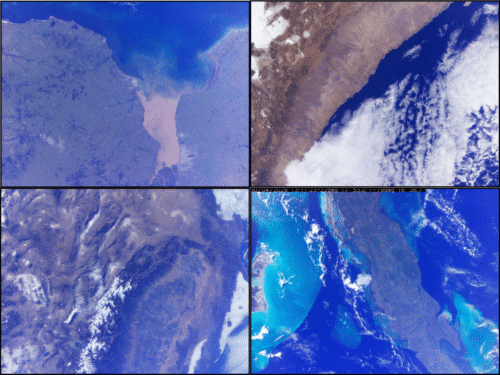
In Mission Space Lab, teams wrote Python programs to calculate the speed of the ISS. Using the Astro Pi sensors and Raspberry Pi High Quality cameras, 387 teams (representing 1,299 young people) achieved the prestigious ‘flight status’ and had their programs run in space.
These teams are now receiving their raw data sets, which include images of Earth’s surface captured from 400km above.
Doing science in space: The ‘blue shift’ mystery
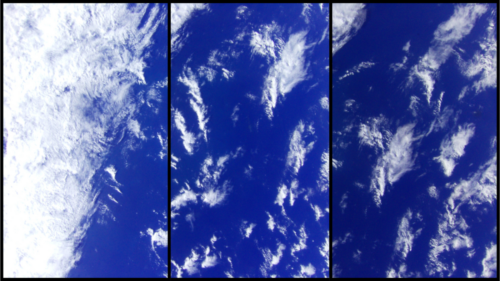
Science in orbit often brings surprises. This year, we noticed the colour balance in some ocean images was shifting toward a bright blue. After investigating, we found the camera’s white balance algorithm was reacting to ‘blue shift’.
This occurs when the spectrum of light compresses as the Earth turns toward the camera at dawn. It’s a fantastic example of the real-world physics our participants encounter when dealing with orbital data!
Inspiring even more young people and communities
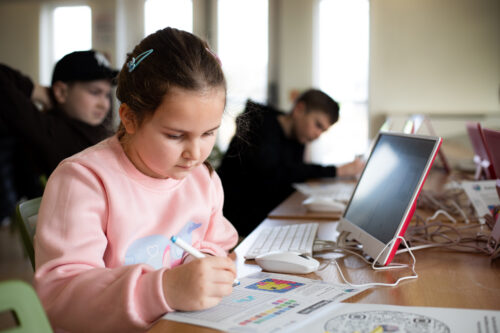
We know what a great opportunity Astro Pi is and how much of an impact it can have on participants and their communities. So we constantly challenge ourselves to widen our reach and bring the challenge to communities around the UK and Ireland, especially those that don’t normally get the chance to send code to space. This year, we visited schools, clubs, and science events. We also trained teachers and volunteers to help us share the challenge.
What’s next?
That’s a wrap for the 2025/26 challenge, but the journey doesn’t end here.
- On Friday 12 June, ESA astronaut Pablo Álvarez Fernández will answer questions submitted by the Mission Space Lab teams. You can watch the livestreamed event on YouTube.
- Save the date: Astro Pi 2026/27 launches Monday 14 September 2026
- Mission Zero: We’ll be selecting new code examples from this year’s Mission Zero submissions for our next project guide
- Mission Space Lab: We have some exciting technical updates coming for the next cohort of Space Lab teams
In the meantime, stay curious, space travelers. The journey has only just begun!
Website: LINK