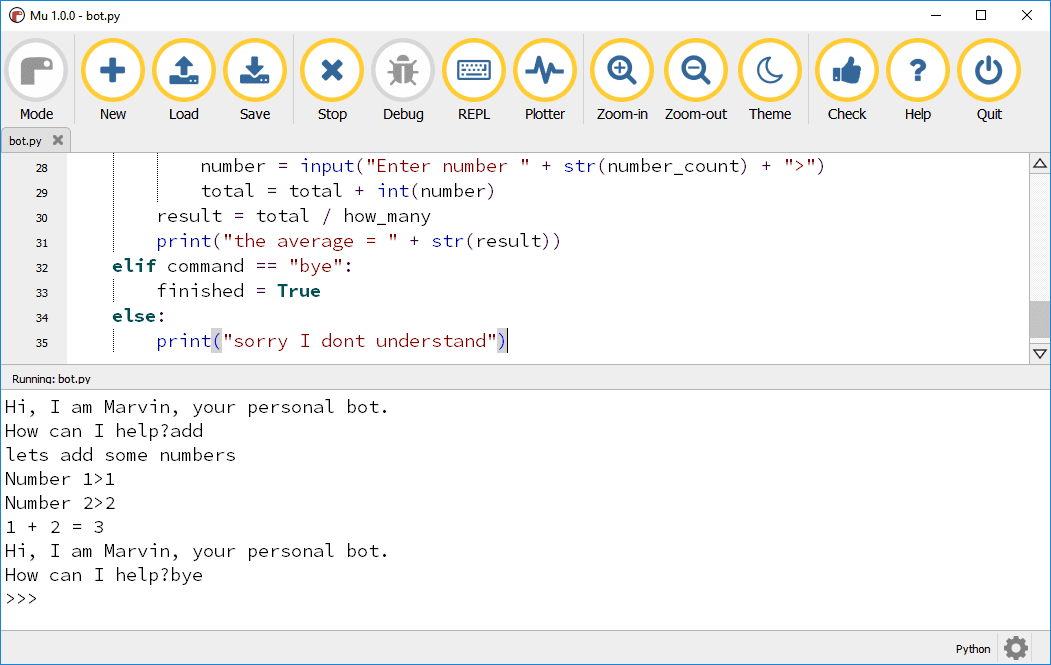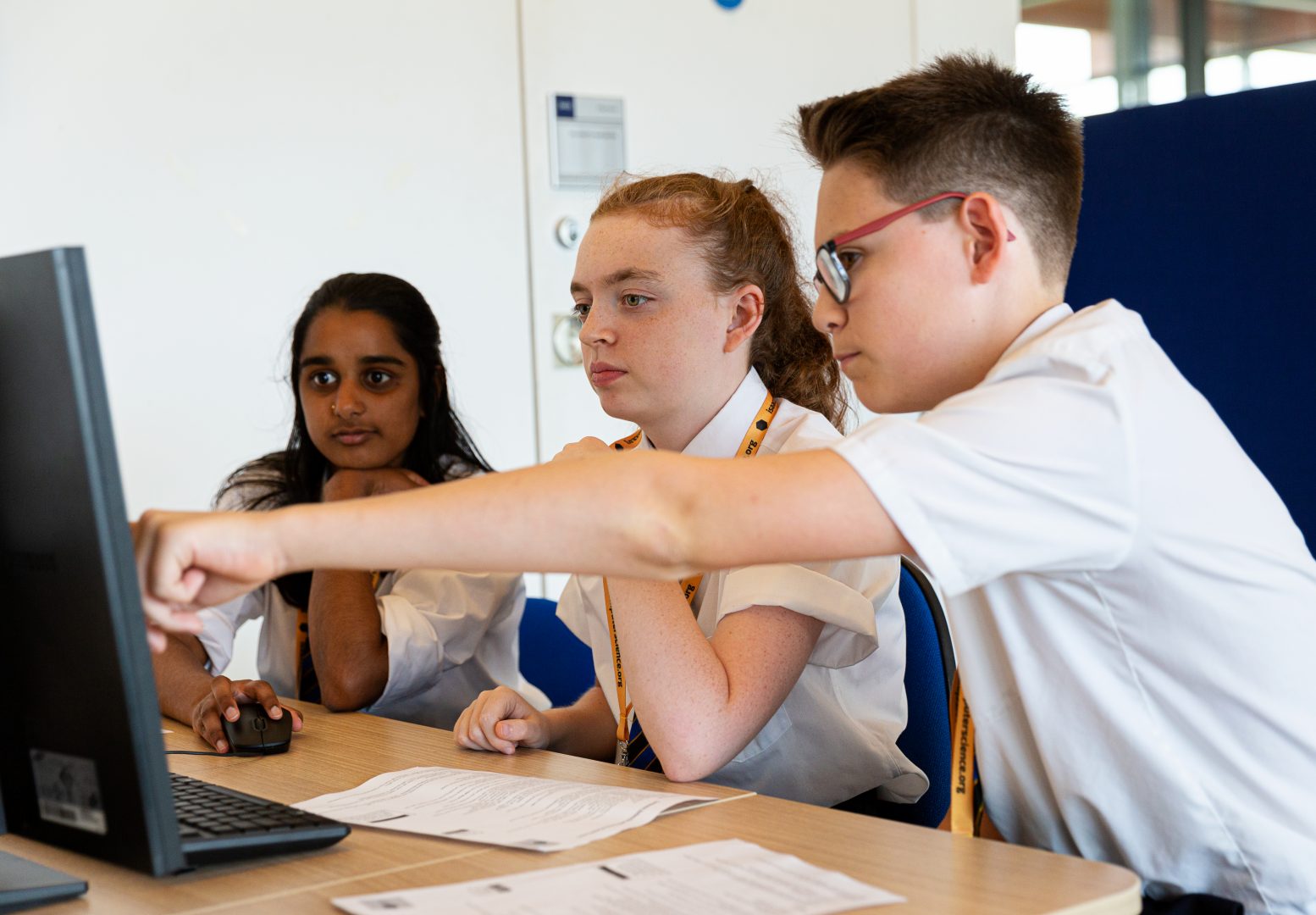
Computing curriculum fundamentals | Hello World #20

Reading Time: 5 minutesWhy are computing systems at the heart of our computing curriculum design? Senior Learning Manager Sway Grantham from the Foundation team explains in her article from the brand-new issue of Hello World, our free magazine for computing educators, out today. Whether you plan lessons on a Computing topic, develop curriculum content, or even write curriculum […]
Combining computing and maths to teach primary learners about variables

Reading Time: 5 minutesIn our first seminar of 2023, we were delighted to welcome Dr Katie Rich and Carla Strickland. They spoke to us about teaching the programming construct of variables in Grade 3 and 4 (age 8 to 10). Dr Katie Rich Carla Strickland We are hearing from a diverse range of speakers in our current series […]

Celebrating the community: Adarsh

Reading Time: 4 minutesIn our work, we get to meet so many super inspiring young people who make things with technology. Our series of community stories is one way we share their journeys and enthusiasm for digital making with you. Today we’re introducing you to Adarsh from California, USA. Meet Adarsh [embedded content] Help us celebrate Adarsh and […]

Gender Balance in Computing — the big picture

Reading Time: 7 minutesImproving gender balance in computing is part of our work to ensure equitable learning opportunities for all young people. Our Gender Balance in Computing (GBIC) research programme has been the largest effort to date to explore ways to encourage more girls and young women to engage with Computing. Commissioned by the Department for Education in […]

Combining research and practice to evaluate and improve computing education in non-formal settings

Reading Time: 7 minutesIn the final seminar in our series on cross-disciplinary computing, Dr Tracy Gardner and Rebecca Franks, who work here at the Foundation, described the framework underpinning the Foundation’s non-formal learning pathways. They also shared insights from our recently published literature review about the impact that non-formal computing education has on learners. Dr Tracy Gardner Rebecca […]

Training teachers and empowering students in Machakos, Kenya

Reading Time: 4 minutesOver the past months, we’ve been working with two partner organisations, Team4Tech and Kenya Connect, to support computing education across the rural county of Machakos, Kenya. [embedded content] Working in rural Kenya In line with our 2025 strategy, we have started work to improve computing education for young people in Kenya and South Africa. We […]

Coolest Projects Global will be back in 2023

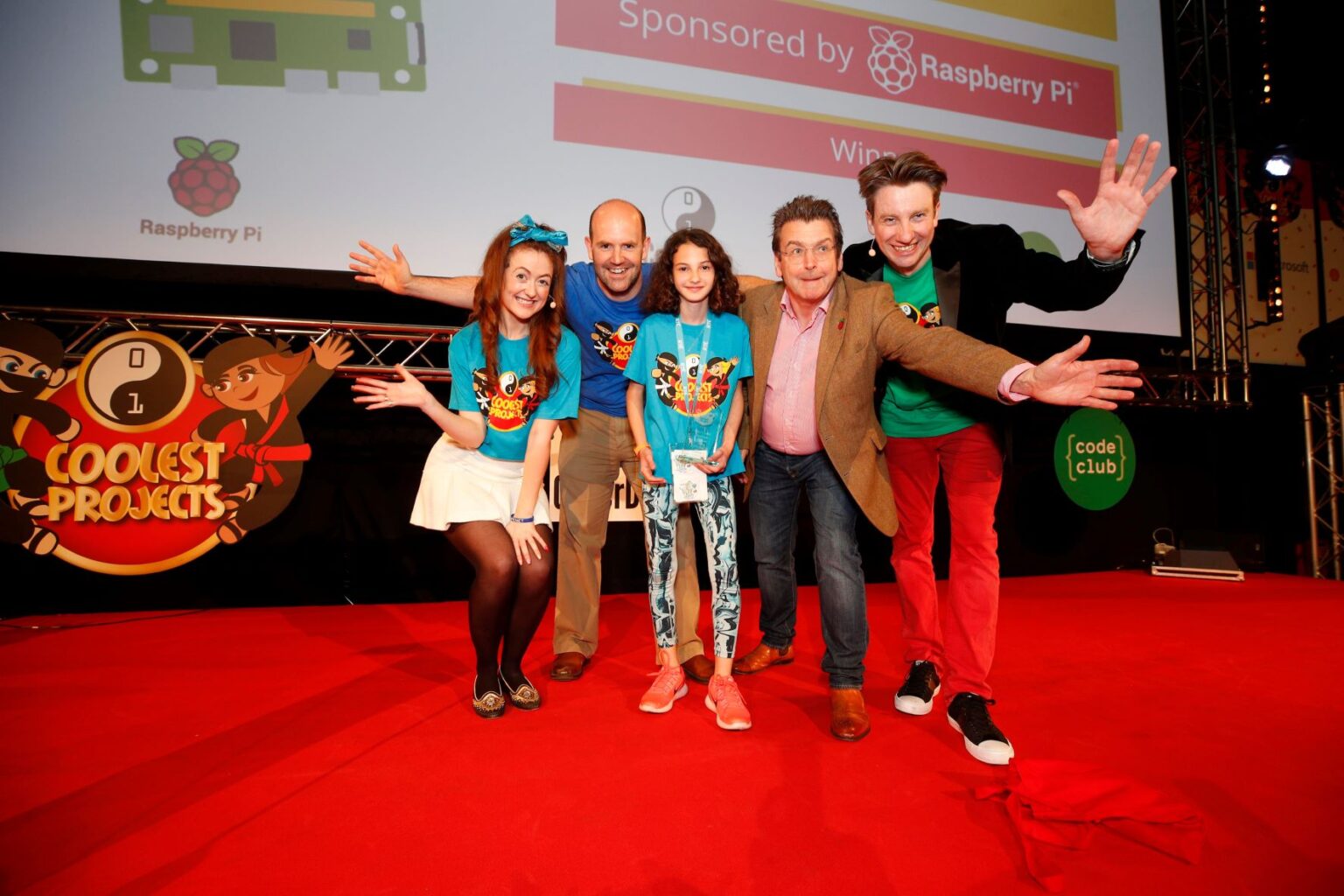
Reading Time: 3 minutesYoung tech creators, get ready: Coolest Projects Global will be back in 2023 and we want to make this the year of your big idea! Coolest Projects Global is the world’s leading online technology showcase for young creators across the world, and we’ll soon be inviting young people to share their creations in the 2023 […]

Computational thinking all year round with UK Bebras

Reading Time: 3 minutesThis November, teachers across the UK helped 367,023 learners participate in the annual free UK Bebras Challenge of computational thinking. ‘Bebras’ is Lithuanian and means ‘beaver’. We support this challenge in the UK, together with Oxford University, and Bebras Challenges run across the world, with more than 3 million learners from schools in 54 countries […]

Reflecting on what we teach in computing education and how we teach it

Reading Time: 5 minutesReflecting is important within any line of work, and computing education is no different. Reflective practice is always valuable, whether you support learners in a non-formal setting, such as a Code Club or CoderDojo, or in a more formal environment, such as a school or college. When you reflect, you might for example evaluate a […]

768 teams of young people have entered Astro Pi Mission Space Lab 2022/23

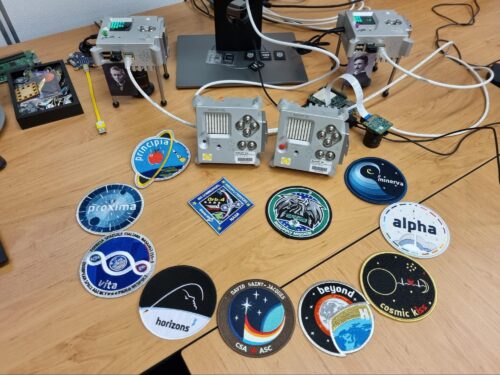
Reading Time: 4 minutesThis year, 768 teams made up of 3086 young people from 23 countries sent us their ideas for experiments to run on board the International Space Station (ISS) for Astro Pi Mission Space Lab. Mission Space Lab is part of the European Astro Pi Challenge, an ESA Education programme run in collaboration with us at […]

Using relevant contexts to engage girls in the Computing classroom: Study results

Reading Time: 6 minutesToday we are sharing an evaluation report on another study that’s part of our Gender Balance in Computing research programme. In this study, we investigated the impact of using relevant contexts in classroom programming activities for 12- to 13-year-olds on girls’ and boys’ attitudes towards Computing. We have been working on Gender Balance in Computing […]

Spotlight on primary computing education in our 2023 seminar series

Reading Time: 4 minutesWe are excited to announce our next free online seminars, running monthly from January 2023 and focusing on primary school (K–5) teaching and learning of computing. Our seminars, having covered various topics in computing education over the last three years, will now offer you a close look at current questions and research in primary computing […]

Celebrating the community: Selin

Reading Time: 4 minutesWe are so excited to share another story from the community! Our series of community stories takes you across the world to hear from young people and educators who are engaging with creating digital technologies in their own personal ways. Selin and her robot guide dog IC4U. In this story we introduce you to Selin, […]

Introduce young people to coding with our updated projects

Reading Time: 6 minutesA year ago we launched our Introduction to Scratch path of six new coding projects. This was the first path to use our new 3…2…1…Make! approach for prioritising fun and engagement whilst enabling creators to make the things that matter to them. Creators learn how to add code, costumes, and sounds to sprites as they […]

Take part in the Hour of Code

Reading Time: 5 minutesLaunched in 2013, Hour of Code is an initiative to introduce young people to computer science using fun one-hour tutorials. To date, over 100 million young people have completed an hour of code with it. Although the Hour of Code website is accessible all year round, every December for Computer Science Education Week people worldwide […]

Out now: Hello World’s special edition on Computing content

Reading Time: 3 minutesHello World, our free magazine for computing and digital making educators, has just published its second special edition: The Big Book of Computing Content. A special edition on the content we teach in the Computing classroom While Hello World‘s first special edition, The Big Book of Computing Pedagogy, focused on how we can teach Computing, […]

At what age can a child start coding?

Reading Time: 5 minutesCoding, or computer programming, is a way of writing instructions so that computers can complete tasks. Those instructions can be as simple as ‘move a toy robot forwards for three seconds and then make a beep’, or more complicated instructions, such as ‘check the weather in my local area and then adjust the heating in […]

Get kids creating webpages with HTML and CSS

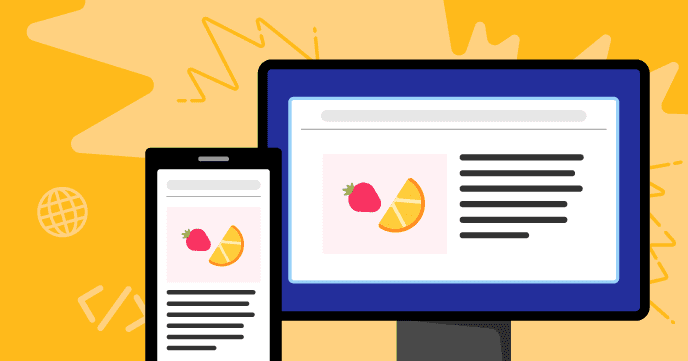
Reading Time: 8 minutesWith our new free ‘Introduction to web development’ path, young people are able to learn HTML and create their own webpages on topics that matter to them. The path is made up of six projects that show children and teenagers how to structure pages using HTML, and style them using CSS. With all the website […]

Non-formal learning activities: What do we know and how do we apply it to computing?

Reading Time: 6 minutesAt the Raspberry Pi Foundation, we engage young people in learning about computing and creating with digital technologies. We do this not only by developing curricula for formal education and introducing tens of thousands of children around the world to coding at home, but also through supporting non-formal learning activities such as Code Club and […]

Learn to program in Python with our online courses

Reading Time: 5 minutesIf you’re new to teaching programming or looking to build or refresh your programming knowledge, we have a free resource that is perfect for you. Our ‘Learn to program in Python’ online course pathway is for educators who want to develop their understanding of the text-based language Python. Each course is packed with information and […]

Building a maths curriculum for a world shaped by computing

Reading Time: 5 minutesIn the penultimate seminar in our series on cross-disciplinary computing, we were delighted to host Conrad Wolfram (European co-founder/CEO of Wolfram Research). Conrad Wolfram Conrad has been an influential figure in the areas of AI, data science, and computation for over 30 years. The company he co-founded, Wolfram Research, develops computational technologies including the Wolfram […]

Girls’ sense of belonging in the Computing classroom: Study results

Reading Time: 6 minutesWe’re sharing the fourth evaluation report on projects in our Gender Balance in Computing research programme today. This is a programme we’ve been running, with partner organisations, as part of the National Centre for Computing Education, funded by the Department for Education in England. The programme’s overall goal is to identify ways to encourage more […]